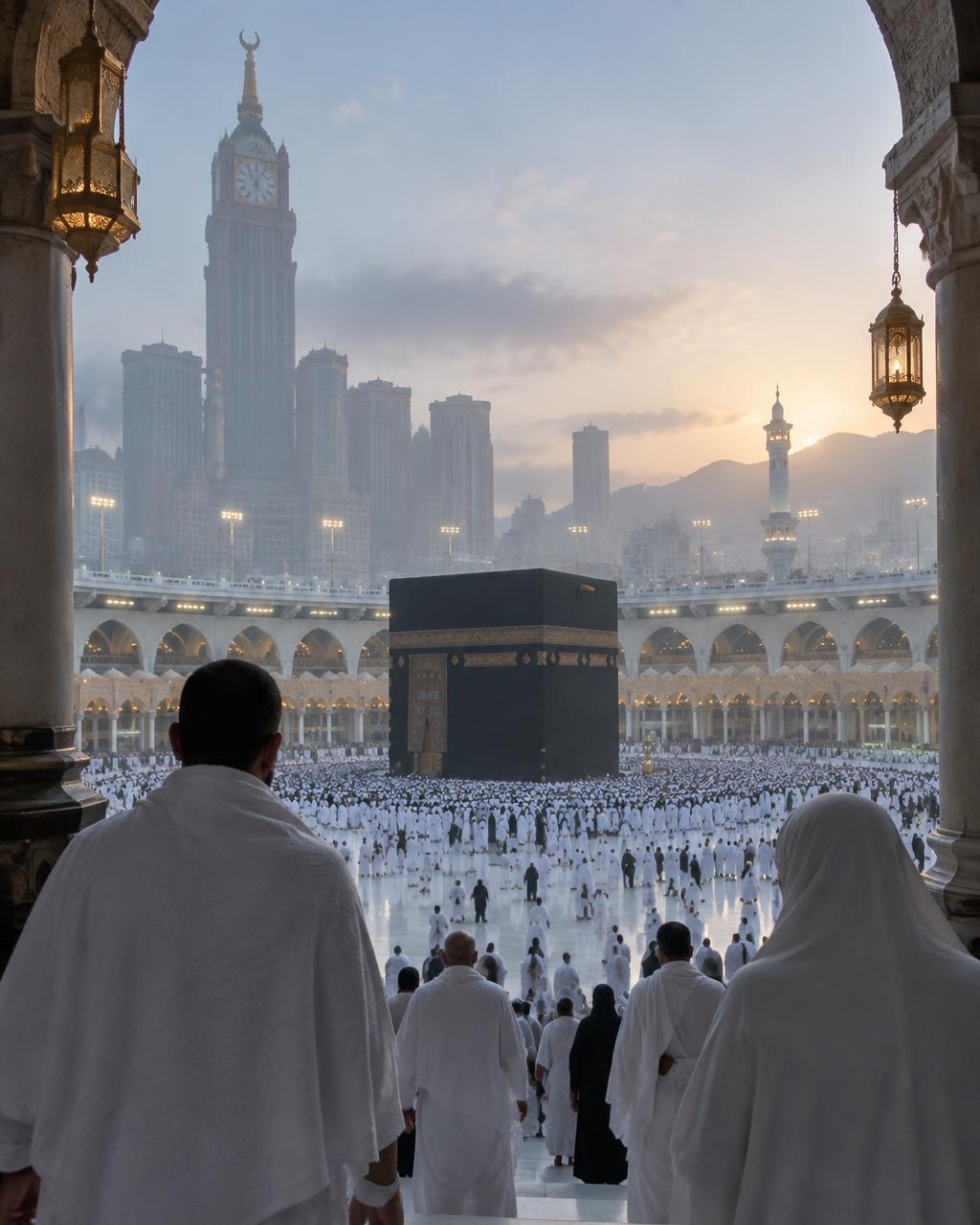
- Umrah in Ramadan combines fasting, hard physical effort and heat, which together raise the risk of low and high blood sugar.
- Doctors use IDF–DAR guidelines to place people with diabetes in very high, high or moderate/low risk groups; only your doctor can say which applies to you.
- Book a pre-Ramadan assessment 6 to 8 weeks before Ramadan: for Ramadan 1448, that means December 2026.
- Guidelines say to break the fast if blood sugar falls below 70 mg/dL or rises above 300 mg/dL, or if you feel unwell; confirm your own numbers with your doctor.
- Whether you should fast is a decision for you, your doctor and, on the religious side, a scholar you trust.
In this Guide
Umrah in Ramadan is one of the most sought-after journeys of the year. For pilgrims with diabetes it also brings together three things that each affect blood sugar: long hours without food or water, hard physical effort, and heat and crowds. Together they need more careful planning than either a normal Ramadan at home or an Umrah at another time of year.
This guide explains how doctors assess the risk, the questions to take to your own doctor, and how to plan the trip around their advice. It is general information. It does not tell you whether you should fast: that decision belongs to you, your doctor and, for the religious question, a scholar you trust.
Ramadan 1448 is expected to begin around 8 February 2027, depending on the moon sighting. If you are planning to travel, book your doctor's appointment for December 2026.
Why Ramadan changes the calculation
At home, many people with diabetes fast in Ramadan with their doctor's guidance. Umrah in Ramadan adds pressures that a normal day of fasting does not:
- Physical effort. Tawaf and sa'i involve a lot of walking, often after a long journey and with little sleep. Diabetes guidelines treat hard physical effort while fasting as a higher-risk situation, because of the risk of low blood sugar (hypoglycaemia).
- Heat and fluids. Saudi Arabia's Ministry of Health advises pilgrims to drink water frequently and avoid direct sun in the middle of the day, which is harder to do while fasting.
- Broken routine. Iftar and suhoor times, sleep and meals all shift, especially in the last ten nights, when many pilgrims stay up for night prayers.
- Crowds. In the busiest weeks it can be hard to reach food, water or your medicines quickly in the Haram.
International diabetes guidelines list "people with diabetes performing intense physical labour" among the higher-risk groups for fasting. A pilgrim doing Umrah while fasting may fall into that picture even if their diabetes is well controlled at home.
The risk categories, explained
The International Diabetes Federation (IDF) and the Diabetes and Ramadan (DAR) International Alliance publish practical guidelines that doctors use to assess people with diabetes who wish to fast. They group people by risk. In broad terms:
- Very high risk includes, among others, people who had severe hypoglycaemia or diabetic ketoacidosis in the three months before Ramadan, people with poorly controlled type 1 diabetes, those on chronic dialysis or with advanced kidney disease, pregnancy with pre-existing diabetes, acute illness, and older age with ill health.
- High risk includes, among others, type 2 diabetes with sustained poor control, well-controlled type 1 diabetes, kidney disease at an earlier stage, stable heart or blood-vessel complications, and people doing intense physical labour.
- Moderate or low risk generally means well-controlled type 2 diabetes on certain treatments.
The guidelines advise people in the very high and high risk groups not to fast, and say that anyone who fasts should receive structured education, check their blood sugar regularly and have their medicines adjusted by their doctor. The IDF published an updated edition of the guidelines in 2021, which your doctor may use.
Only your doctor can say which group you are in. The lists above are a summary to help you understand the conversation, not a self-assessment.
The questions for your doctor
Book an appointment 6 to 8 weeks before Ramadan, which is what the guidelines recommend for a pre-Ramadan assessment. Take your recent blood test results, a list of every medicine you take, and your travel dates. Ask:
- Which risk group am I in, and why?
- Is it safe for me to fast at all, and is it safe while doing Umrah? These may have different answers.
- How should my medicines change in timing or dose for Ramadan, and for travel days?
- How often should I check my blood sugar, and at what times of day?
- At what readings must I break the fast? Write the numbers down.
- What should I do if I feel unwell in Makkah or Madinah, and what should I carry?
- How should I manage the flights and the time change?
- Can you give me a letter describing my condition and medicines, to carry with me?
The guidelines say everyone with diabetes who fasts should break the fast if their blood sugar falls below 3.9 mmol/L (70 mg/dL), rises above 16.7 mmol/L (300 mg/dL), or if they have symptoms of a low or feel acutely ill. Ask your doctor to confirm the numbers that apply to you.
The religious side is a separate conversation. The Qur'an makes allowances for people who are ill and for travellers (Surah al-Baqarah, 2:184). Whether and how they apply to you is a question for a scholar you trust.
Planning the trip around your answer
Plan the trip after you have your doctor's advice, not before.
If your doctor advises you not to fast, you can still perform Umrah in Ramadan and share in the atmosphere of the month. Plan meals, medicines and rest around the rites as you would at any other time of year.
If your doctor supports you fasting, plan to reduce risk:
- Ask your doctor about timing. For example, whether performing tawaf and sa'i after iftar, when you can eat, drink and take medicines first, would suit your treatment.
- Choose a hotel close to the Haram with a short, level walk, so you can get back to food, water and your medicines quickly.
- Do not plan the Umrah on your arrival day. Rest first, especially after an overnight flight.
- Avoid the busiest nights for the rites if you can. The last ten nights are the most crowded.
- Travel with someone who knows about your diabetes and what to do if you have a low.
Whatever your doctor advises, carry enough of your medicines and testing supplies for the whole trip plus a few extra days, in your hand luggage, in original packaging, with your doctor's letter. Our packing checklist and Saudi medication rules explains how.
On the ground — heat, crowds, timings
- Check your blood sugar more often than at home, as your doctor advises, especially before and after tawaf and sa'i.
- Carry what your doctor advises for treating a low at all times, so you can break the fast quickly if you need to.
- Drink water frequently between iftar and suhoor, as the Saudi Ministry of Health advises pilgrims, within any fluid limit your doctor has set.
- Ask your doctor or dietitian about suhoor and iftar meals during the trip.
- Protect your feet. International diabetic foot guidance advises checking your feet every day and not walking barefoot.
- Know where to get help. Find the nearest clinic and pharmacy to your hotel on the first day. In an emergency in the Makkah or Madinah regions, call 911.
- Watch for Eid. Guidelines warn that blood sugar can rise during the Eid celebrations after Ramadan, as eating patterns change again.
If you or a family member has diabetes with complications, or needs dialysis, our Medical Desk can help coordinate the trip around your treatment, with every medical decision referred to your own doctor.
Indicative hotels, private transport and ziyarat: ₹1,23,356 – ₹1,66,894This is a planning estimate, not a firm quote. Excludes flights and visa. Open the full calculator or build your trip.
Good to know
Frequently asked questions
01Can a person with diabetes do Umrah in Ramadan?
02When should I see my doctor before a Ramadan Umrah?
03When should a person with diabetes break their fast?
04Should I do tawaf and sa'i after iftar?
05Do I need a doctor's letter for my diabetes medicines?
06Does Islam allow people with diabetes not to fast?
Marhaba Haji Pilgrimage Editorial
Verified GuidanceSenior Pilgrimage Logistics & Guidance Specialist
Authored by Marhaba Haji's pilgrimage specialists with hands-on experience guiding pilgrims across Makkah and Madinah.
How Marhaba can help
Medical Desk
Coordination for dialysis and complex conditions — every arrangement confirmed in writing first.
About Medical Desk