- Saudi Arabia's Ministry of Hajj and Umrah says women do not need a mahram for Umrah; whether that fits your own practice is a question for a scholar.
- The Prophet ﷺ told 'Aisha not to perform tawaf during her period until she was clean (Sahih al-Bukhari 305), so many women plan dates around their cycle.
- Track your cycle for three months, plan Umrah for clear days and book two or three spare nights in Makkah.
- Medicines that delay a period are a decision for your own doctor, made well before travel.
- Book the Rawdah in the Nusuk app under the women's session, as early as you can.
In this Guide
Women plan Umrah with a few extra questions that men rarely have to think about: travelling with or without a mahram, what happens if a period comes at the wrong time, and how to visit the Rawdah in Madinah. None of these should stop you. They just need planning a little further ahead.
This guide covers the practical side. It does not give religious rulings or medical advice. Where scholars differ, we say so; where a doctor should decide, we say that too.
Mahram rules in brief
Saudi Arabia's Ministry of Hajj and Umrah states that a woman does not need a mahram to perform Umrah, and recommends travelling with a trustworthy group. Adult women apply for the visa with the same documents as any pilgrim.
Whether travelling without a mahram fits your own practice is a separate, religious question, on which scholars differ. Our guide to women's Umrah without a mahram explains the rules and the range of views in more detail.
Planning around your cycle — the calendar-first method
When 'Aisha had her period during Hajj, the Prophet ﷺ told her to do what all pilgrims do, "except that you do not perform the Tawaf round the Ka'ba till you are clean" (Sahih al-Bukhari 305). Because tawaf is part of Umrah, many women plan their dates around their cycle. Here is a simple method:
- Track your cycle for at least three months before booking. Note the start date and length of each period. An app or a paper calendar both work.
- Work out your likely dates during the trip. Mark the days you expect a period, plus a day or two either side.
- Plan the Umrah for days when you expect to be clear. If you are going to Madinah first, you have more flexibility: the time in Madinah can come first, with Makkah later.
- Build in spare days in Makkah. Two or three extra nights give you room if your period arrives early or lasts longer. Remember that every night of an Umrah stay must be booked through Nusuk Masar before the visa is issued, so plan the spare nights from the start.
- Avoid booking Umrah for your arrival day if your dates are tight. Rest, then perform Umrah when you are ready.
Treat your plan as likely rather than certain, and ask your doctor if your cycle is irregular.
If your cycle shifts mid-trip
It happens to many women, and there is usually a way through.
- If your period starts before you enter ihram: the Prophet ﷺ said a menstruating woman reaching the place of ihram "should take a bath, put on ihram and perform all the rites" except tawaf (Sunan Abi Dawud 1744, graded sahih by al-Albani). She then performs tawaf once her period has ended.
- If it starts after you enter ihram, before tawaf: you remain in ihram and wait until your period ends before performing tawaf. The restrictions of ihram continue while you wait.
- Use the waiting time well. Du'a, dhikr, reading about the life of the Prophet ﷺ and time in Madinah all remain open to you. Ask a scholar before you travel whether you may sit in the mosque during your period.
- If your trip is ending and your period has not finished, do not panic. Ask a scholar or a knowledgeable woman teacher, ideally before you travel, so you know your options.
Talk this through with a scholar or woman teacher you trust before you go. Knowing the guidance in advance removes most of the worry.
Medication questions — for your own doctor
Some women ask their doctor about medicines that can delay a period during travel. This is a medical decision that depends on your health, your history and any other medicines you take. Only your doctor can advise you, and we do not.
If you are considering it, ask your doctor:
- whether it is safe for you, given your health and any conditions you have
- when you would need to start, so you are not rushed
- what side effects to expect, and what to do if your period comes anyway
- whether it is safe to take during long flights and in heat
See your doctor well before travel, not the week before. If you take any medicine during the trip, carry it in original packaging with a prescription or doctor's letter.
If the religious side of delaying a period matters to you, ask a scholar as well.
Packing and preparing
- Clothing: the Ministry of Hajj and Umrah's Ihram guide says women may wear any clothing that is loose, covers appropriately and is not designed for adornment. In ihram, the niqab and gloves are not worn; the guide notes that covering the face in front of non-mahram men is not prohibited.
- Period supplies: pack enough for the trip, plus extra. Sanitary products are also sold in pharmacies and supermarkets in Makkah and Madinah.
- Unscented toiletries: perfume and scented products are not allowed in ihram.
- Comfortable shoes you have already walked in. Expect long walks on hard floors.
- A small bag for shoes in the mosque, a prayer mat, a water bottle and a light scarf for spare.
- Medicines in original packaging, with a doctor's letter. Our packing checklist and Saudi medication rules explains what is allowed.
- Documents: your passport, visa, vaccination certificate, hotel details and the numbers of your group leader and hotel.
Every Umrah pilgrim needs a meningococcal vaccination at least 10 days before arrival. Pregnant women, pilgrims over 65 and those with certain chronic conditions also need proof of COVID-19 vaccination or immunity. If you are pregnant or think you might be, talk to your doctor before you book.
Rawdah for women — slots and strategy
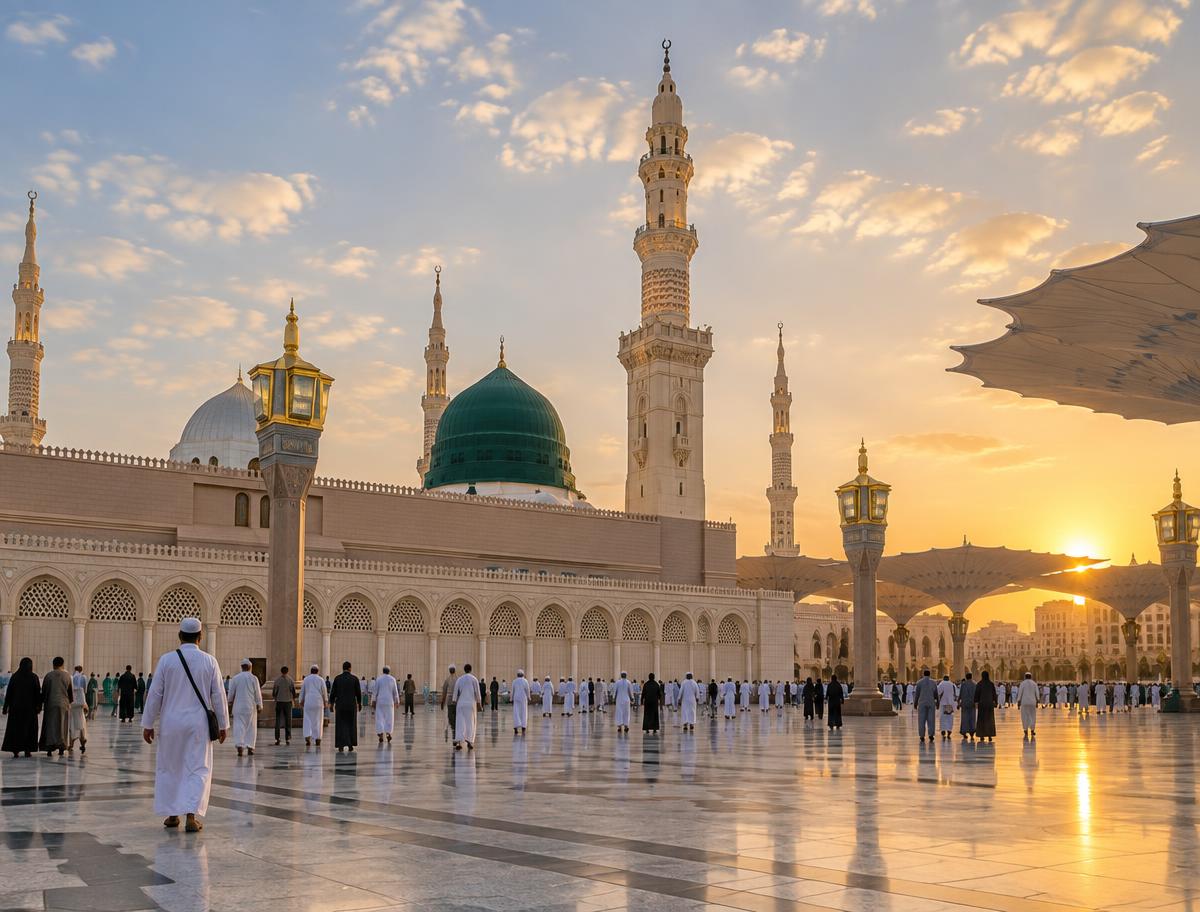
The Rawdah is an area in the Prophet's Mosque in Madinah that many pilgrims long to pray in. Visits are booked as a time slot in Saudi Arabia's Nusuk app, with separate sessions for women and men.
- Book under the women's session. A permit for the wrong session will not be accepted at the entrance.
- Book as early as you can. Women's slots fill quickly, especially in busy seasons.
- Check the times shown in the app for your dates. Times and booking rules change, so rely on Nusuk rather than older advice.
- Arrive early and go with others if you can. The women's area is busy and visits are short.
- Plan your du'as before you go in, so you are not searching for words in the crowd.
- Check your cycle dates when you book, if you prefer to pray in the Rawdah when you are not menstruating.
Marhaba's women-friendly group departures are led by an experienced woman group leader, include a women's briefing before travel, and book a women's Rawdah visit for the group through Nusuk where slots allow.
Indicative hotels, private transport and ziyarat: ₹1,23,356 – ₹1,66,894This is a planning estimate, not a firm quote. Excludes flights and visa. Open the full calculator or build your trip.
Good to know
Frequently asked questions
01Can a woman perform Umrah during her period?
02How do I plan Umrah around my period?
03Can I take medicine to delay my period for Umrah?
04What should women wear for Umrah?
05How do women book the Rawdah?
06Do women need a mahram for Umrah?
Marhaba Haji Pilgrimage Editorial
Verified GuidanceSenior Pilgrimage Logistics & Guidance Specialist
Authored by Marhaba Haji's pilgrimage specialists with hands-on experience guiding pilgrims across Makkah and Madinah.
How Marhaba can help
Women's Group Umrah
Women-friendly departures led by our woman group leader, with most of the group made up of women.
About Women's Group Umrah