- The Umrah visa allows a stay of up to 90 days, but the dates printed on your own visa are what count.
- Every night of the stay must be booked through Nusuk Masar before the visa is issued.
- The Umrah visa does not allow work, and overstaying can bring fines of up to SAR 50,000, imprisonment and deportation.
- Over weeks, a short walk to the Haram and a comfortable room matter more than over a few nights.
- A weekly rhythm of worship, rest and practical tasks keeps a long stay sustainable.
In this Guide
Some pilgrims want more than a week. Retirees who have waited a lifetime, couples who want to spend a season near the Haram, families who can finally set aside a month for worship. A long stay is a different kind of Umrah. It is less a trip and more a temporary life, with its own rhythm, practicalities and costs.
This guide covers what changes when you stay for weeks rather than nights. The visa facts were checked on the date shown at the top of this page; rules change, so confirm them again before you book.
Who long stays suit (and who they don't)
Long stays suit people who:
- can commit several weeks to worship without pressing work or family duties at home
- are comfortable living more independently, with help a message away rather than at their side
- are in reasonably stable health, with a plan for their regular medicines
- want time for ziyarat, reflection and rest, not just the rites
They suit people less well if:
- they need constant support or a fully guided day
- a health condition needs frequent specialist care (talk to your doctor first)
- they are hoping to work, study or earn while there, which the Umrah visa does not allow
If a shorter, fully guided package would serve you better, that is a perfectly good choice. A calm two weeks can hold more worship than a stressful two months.
Visa reality — the 90-day limit, your printed dates, no work
Three facts shape every long stay:
- Up to 90 days. Saudi Arabia's Ministry of Hajj and Umrah has said the Umrah visa allows a stay of up to 90 days. That is the maximum, not a promise: the dates printed on your own visa are what count at the border.
- Every night booked before the visa. Since June 2025, Umrah visas are issued only after hotel bookings for the whole stay are confirmed through Nusuk Masar. A long stay must be fully planned, city by city and night by night, before you apply.
- No work. The Umrah visa does not allow work, or Hajj.
Overstaying is serious. Saudi Arabia's Ministry of Interior has warned that it can bring fines of up to SAR 50,000, imprisonment of up to six months and deportation. Book your return inside your visa dates with a margin of a few days for delays, and do not plan on an extension.
If you hold a residence permit or visa that qualifies you for Saudi Arabia's tourist eVisa, different rules apply. See our Umrah visa validity and overstay guide and tourist eVisa guide.
Where to stay — the distance/comfort/cost triangle over weeks
Over a week, you can put up with a long walk or a small room. Over two months, small compromises add up. Think about three things together:
- Distance. Closer to the Haram costs more per night, but saves you a walk five times a day, in all weathers. For older pilgrims, a short, level route matters more than anything else.
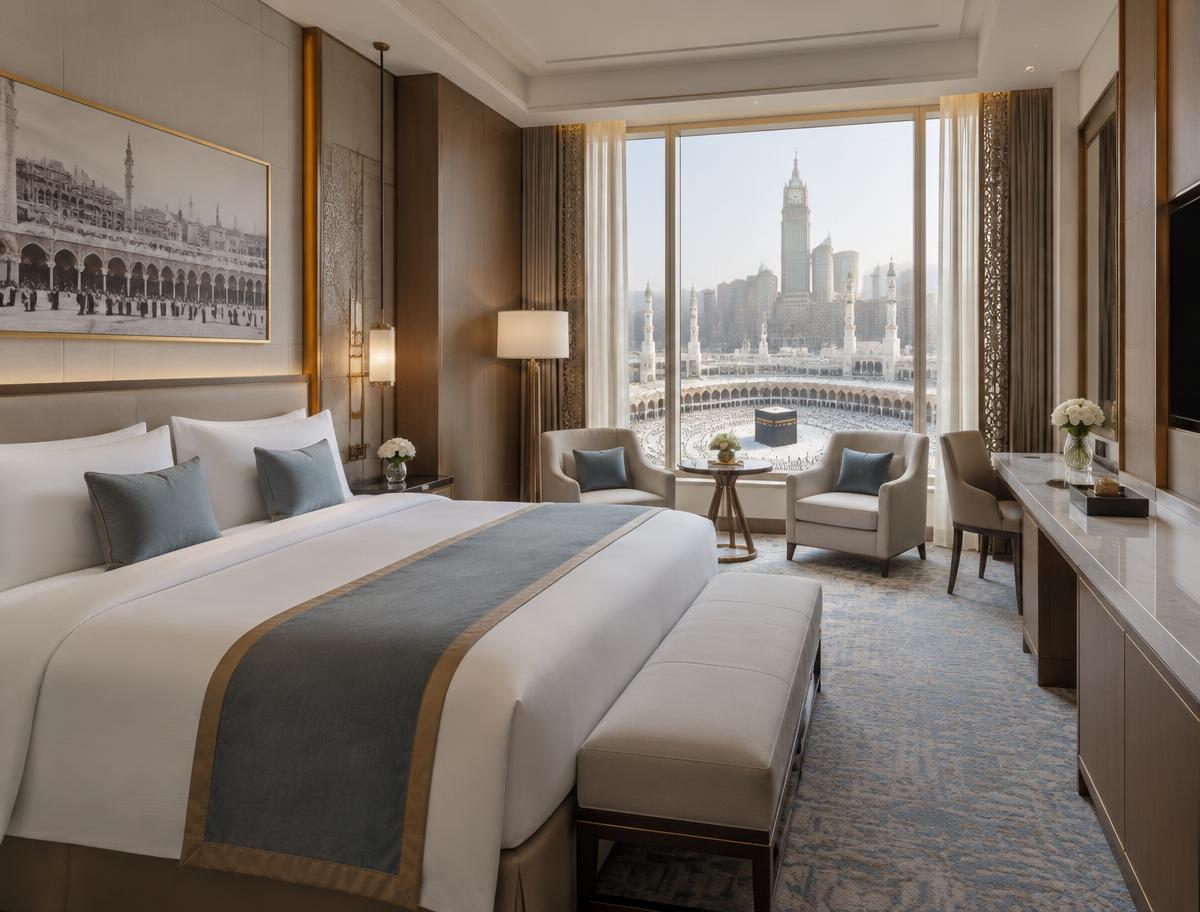
- Comfort. Space, a proper chair, natural light and a quiet room matter more over weeks than they do over a few nights.
- Cost. Long stays usually cost less per night than short ones, and the difference grows with distance.
You have two broad options:
- Hotels at long-stay rates. Simplest: cleaning, a front desk and often meals. Ask about weekly or monthly rates.
- Serviced apartments. More space and a kitchenette for self-catering, which many long-stay pilgrims prefer. Check that the apartment is part of your Nusuk Masar booking.
Many long stays are split between Makkah and Madinah. Madinah is often calmer and gentler for long periods; Makkah is where you will want to be for Umrah itself and for the days around it.
A weekly rhythm
The pilgrims who get the most from a long stay tend to build a rhythm rather than try to be in the Haram every waking hour. Without one, the first week is intense and the third week is exhausted.
A rhythm might look like this:
- Daily: the five prayers in the mosque, as many as your strength allows, with Qur'an and dhikr in between, and real rest in the afternoon heat.
- Weekly: one longer night of worship, one day of ziyarat or a quiet outing, and one day of practical tasks: laundry, shopping and calling home.
- Across the stay: further Umrahs if you wish to perform them, time in Madinah, and space for reflection, especially in the last week.
Write your rhythm down in the first few days and adjust it as you learn what your body can sustain.
Daily life — food, laundry, connectivity, money
- Food. Both cities have food for every budget, including Indian and Pakistani restaurants. A kitchenette lets you cook simple meals and eat the way you do at home.
- Laundry. Many hotels offer laundry, and laundries are common near the Haram. Pack fewer clothes than you think and wash weekly.
- Connectivity. A Saudi SIM or eSIM registered with your passport is usually far cheaper than roaming over weeks. Data matters for the Nusuk app, maps and calls home.
- Money. The Saudi riyal is pegged to the US dollar at 3.75 riyals. Cards are widely accepted in shops and hotels, but carry some cash for small purchases. Tell your bank you will be abroad for an extended period so your card is not blocked.
Health over a long stay
A long stay is a marathon, and small health problems become bigger ones if ignored.
- Talk to your doctor before you go, and carry enough of your regular medicines for the whole stay, in original packaging, with a doctor's letter. Our packing checklist and Saudi medication rules explains what to carry.
- Vaccinations. Every Umrah pilgrim needs a meningococcal vaccination given at least 10 days before arrival. Pilgrims over 65 or with certain chronic conditions also need proof of COVID-19 vaccination or immunity.
- Heat and fluids. The Saudi Ministry of Health advises pilgrims to avoid direct sun during the rites and drink enough fluids. Over weeks, steady hydration and afternoon rest matter more than any single day.
- Know your nearest care. On your first day, find the nearest clinic, pharmacy and hospital to where you are staying.
- Insurance. The Umrah visa includes mandatory health insurance. Read what it covers, and consider extra cover for a long stay or an existing condition.
Costs — how the maths changes
A long stay is not simply a short package multiplied. The cost per day usually falls, but the total rises, and new costs appear.
- Accommodation per night falls with long-stay rates, especially in apartments and in quieter seasons.
- Food costs depend on you. Self-catering is cheaper than eating out for every meal.
- New costs appear: laundry, a local SIM, local transport, medicines and the occasional ziyarat outing.
- Season changes everything. Ramadan and school holidays raise prices sharply; quieter months are much kinder to a long budget.
- Flights barely change with the length of the stay, so the longer you stay, the smaller their share of the total.
Ask for a written plan that lists each item separately, so you can compare a long stay honestly with a shorter package.
If you would like a long stay designed around you, with every night booked and a coordinator available on request, see our Long-Stay Umrah service.
Indicative hotels, private transport and ziyarat: ₹1,23,356 – ₹1,66,894This is a planning estimate, not a firm quote. Excludes flights and visa. Open the full calculator or build your trip.
Good to know
Frequently asked questions
01How long can I stay in Saudi Arabia on an Umrah visa?
02Can I extend my Umrah visa during a long stay?
03Can I work while on an Umrah visa?
04Is a serviced apartment allowed for an Umrah visa stay?
05Is a long stay cheaper per day than a package?
06How should I manage my medicines for a stay of several weeks?
Marhaba Haji Pilgrimage Editorial
Verified GuidanceSenior Pilgrimage Logistics & Guidance Specialist
Authored by Marhaba Haji's pilgrimage specialists with hands-on experience guiding pilgrims across Makkah and Madinah.
How Marhaba can help
Long-Stay Umrah
A month or more in the two holy cities, within your visa dates — designed per family, by enquiry.
About Long-Stay Umrah