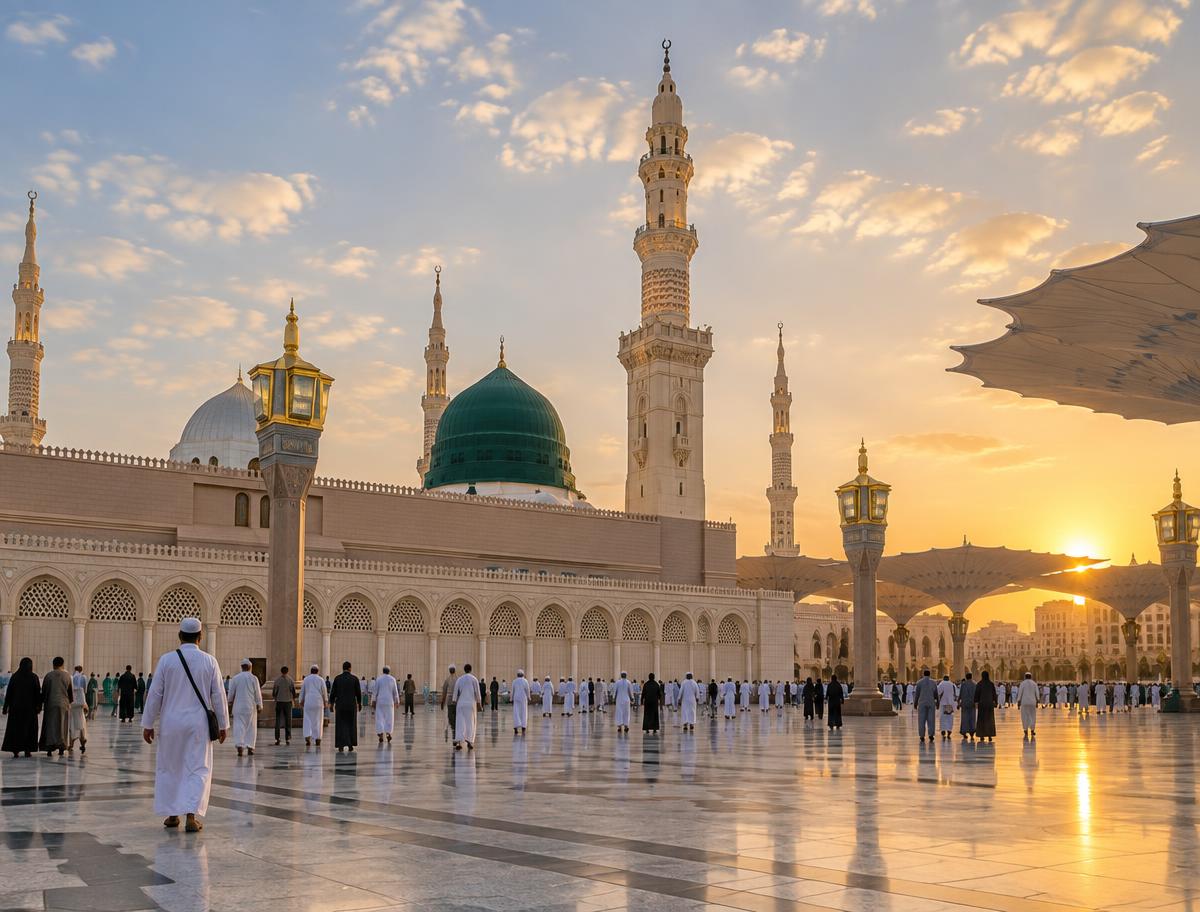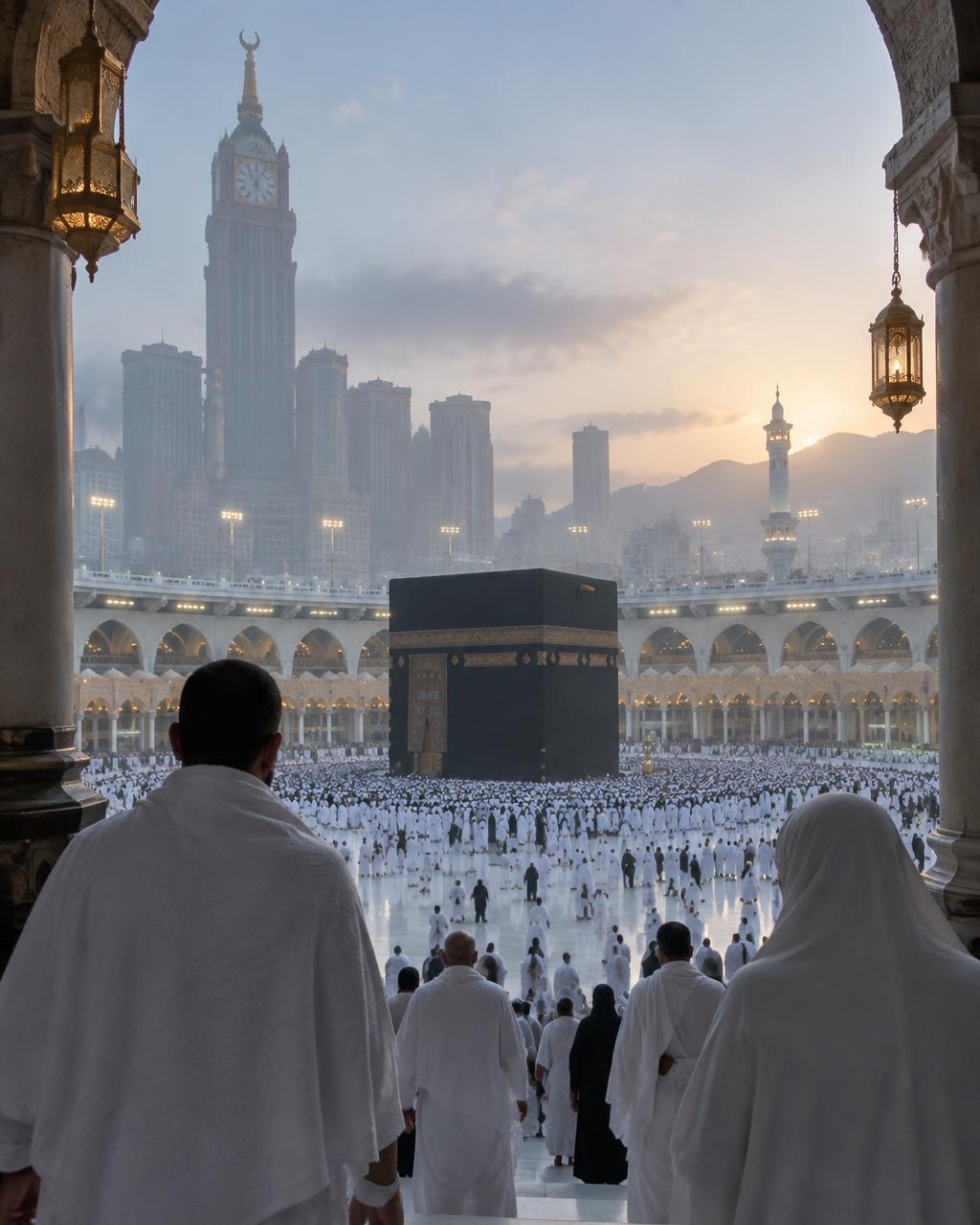
- Pick the convergence city first: Makkah for an early Umrah, or Madinah for a gentler start.
- Set dates around the family member with the least leave, and make sure everyone overlaps for the Umrah itself.
- Name a person for every leg an elderly parent travels, especially if she arrives before the others.
- Relatives abroad with certain US, UK or Schengen visas or a GCC residence permit may qualify for a Saudi tourist eVisa, which allows Umrah outside the Hajj season.
- Keep the whole family in the same hotel in each city, on one shared schedule.
In this Guide
Ammi is in Hyderabad. One son works in Dubai, a daughter lives in Toronto, and the youngest is in Bengaluru. For years the family has said they will do Umrah together "when everyone can get leave". This guide is for the year they decide to make it happen.
A reunion Umrah is two journeys in one: a pilgrimage, and a logistics puzzle across several countries, time zones and passports. The puzzle is very solvable if you take it in the right order.
The shape of the problem
Every family is different, but the same questions come up every time:
- Several starting points. Each household flies from a different city, often on different days.
- Different documents. Relatives living abroad may qualify for a different Saudi visa from family travelling from India.
- One person who must not be left alone. Usually an elderly parent, who may arrive first or travel alone on one leg.
- Different leave. One sibling has ten days, another has three weeks.
- One budget conversation that nobody wants to start.
Write these down for your family before you book anything. The answers decide everything else.
Choosing the convergence city and dates
The convergence city is where the family first comes together. There are two natural choices:
- Makkah first. Most international flights land at Jeddah airport, roughly one to one and a half hours from Makkah by road depending on traffic, and linked to Makkah by the Haramain train. Starting in Makkah means everyone performs Umrah soon after arriving, then travels to Madinah together.
- Madinah first. Flying into Madinah gives a gentler start, especially for older parents, before travelling to Makkah for Umrah.
Then set the dates around the person with the least flexibility, which is often the sibling with the shortest leave. Build the plan so the whole family overlaps for the days that matter most, usually the Umrah itself and the time in Madinah. Others can arrive earlier or stay on.
A few practical points:
- Avoid tight connections for an elderly parent. A long, calm layover is better than a missed flight.
- Think about ihram timing for each person. Those travelling straight to Makkah enter ihram before crossing the miqat, which for most flights from abroad happens in the air. Those going to Madinah first enter ihram later, on the way from Madinah to Makkah. Make sure each household knows its own plan.
- Plan early around peak seasons. Ramadan and school holidays fill flights and hotels near the Haram quickly.
Who accompanies Ammi on each leg
This is the most important part of the plan, and the one most often left vague.
Walk through the journey leg by leg, and name a person for each one:
- Home to the departure airport. Who takes her, and who checks her in?
- The flight. Is she flying alone? If so, request airline wheelchair or meet-and-assist service when booking, for every segment.
- Arrival. If she lands before the rest of the family, who meets her at the airport, and who is with her until she is in her room?
- Between cities. Who travels with her from Makkah to Madinah?
- The journey home. Who sees her onto the flight, and who meets her at home?
If a parent will arrive first, the safest arrangement is a named driver waiting at arrivals and a contact who stays on the phone until she is checked in. Agree it in writing, not as "someone will be there".
Our guide to Umrah with elderly parents covers pace, rest and mobility once everyone is together.
Visas and documents per origin
Treat each household's paperwork as its own checklist, because the rules depend on passport and residence.
- Family travelling from India on an Indian passport use an Umrah visa. Since June 2025, Umrah visas are issued only after hotel bookings for every night of the stay are confirmed through Nusuk Masar.
- Relatives living abroad may have another option. Saudi Arabia allows Umrah on all visa types, including the tourist eVisa, outside the Hajj season, and Indian passport holders with certain valid US, UK or Schengen visas or residence, or a GCC residence permit, may qualify for the tourist eVisa. Eligibility is set by Saudi Arabia and changes, so check each person's case on the official portal before booking.
- Relatives with other passports follow the rules for their own nationality.
Whatever the visa, every Umrah pilgrim needs a meningococcal vaccination given at least 10 days before arrival, and pilgrims over 65 or with certain chronic conditions also need proof of COVID-19 vaccination or immunity.
For more on which Saudi visa fits which traveller, see our Saudi visa options for Indian passport holders.
One hotel, one schedule
Once the family is together, keep it together.
- The same hotel in each city. Different hotels sound workable until you try to meet for Fajr. Book everyone in the same hotel, and get it confirmed in writing.
- One shared schedule. Write down the Umrah time, the move to Madinah, ziyarat and meals, and share it with everyone. Mark which parts are together and which are free time.
- A single family group chat. One place for times, room numbers and changes, with one person responsible for the plan.
- Agreed meeting points. Choose a numbered gate in each mosque where the family meets if anyone gets separated.
- Room for different paces. Younger family members may want to spend long hours in the Haram. Plan for the parent who needs to rest, so nobody feels they are holding the others back.
Costs — who pays for what
Money is often the quiet strain on a family trip. Settle it before anyone books.
- Agree the model first. Some families have one person pay for everything; others split by household, or the children share the parents' costs. There is no right answer, only an agreed one.
- Get one written plan. A single quote showing each household's flights, rooms and transfers makes the conversation factual rather than awkward.
- Know what moves the price. Season, hotel distance from the Haram, room sharing, flight times and the number of nights all make a large difference.
- Decide who holds the booking. One person paying and holding the booking keeps changes simple, and the family can settle up among themselves.
If you would like one coordinator to plan every origin, meet every arrival and keep the whole family in one hotel, see our Reunion Umrah service.
Indicative hotels, private transport and ziyarat: ₹1,23,356 – ₹1,66,894This is a planning estimate, not a firm quote. Excludes flights and visa. Open the full calculator or build your trip.
Good to know
Frequently asked questions
01Can family members from different countries do Umrah together?
02Can my sibling in the Gulf use a tourist visa for Umrah?
03What if our mother arrives before the rest of us?
04Should we start in Makkah or Madinah?
05How do we handle different amounts of leave?
06How should a family split the cost of a reunion Umrah?
Marhaba Haji Pilgrimage Editorial
Verified GuidanceSenior Pilgrimage Logistics & Guidance Specialist
Authored by Marhaba Haji's pilgrimage specialists with hands-on experience guiding pilgrims across Makkah and Madinah.
How Marhaba can help
Reunion Umrah
One family, many countries, one Umrah — flights from every origin planned so you converge together.
About Reunion Umrah